At the heart of your initiative, #GiftANewBeginning, lies a powerful belief in second chances. What is the core philosophy driving this movement, and how will you know when it’s truly making a difference?
#GiftANewBeginning is not about second chances. It’s about restarting—with a new approach, a renewed mindset, and a belief that the old ways are not the only ways forward.
This initiative was born from a realization that education systems often fail not just because of lack of resources, but because of outdated assumptions—about learners, about teachers, and about what’s possible. Too often, we try to fix problems using the same tools that caused them. #GiftANewBeginning is about disrupting that cycle. It’s about asking bold questions, designing new models, and embracing solutions rooted in empathy, relevance, and innovation. Whether we are reimagining classrooms for children in crisis zones, designing adaptive learning kits for marginalized communities, or launching teacher fellowships that reward creative risk-taking, the goal remains the same: to redesign the journey, not just resume it.
Our partnership with India Exim Bank, under their CSR initiative, is a perfect example of this approach in action. By working closely with public schools—providing tools, building sustainable infrastructure, and continuously monitoring learning outcomes through evidence—we’re showing what #GiftANewBeginning truly stands for.
I’ll know this movement is working when we stop measuring success by old benchmarks—and instead, start seeing learners who are curious again, teachers who are fearless again, and communities that believe again.
If this vision resonates with you, I invite you to stand with us. This is not just a campaign—it’s a call to action. A call to rewrite how we think about learning, opportunity, and change. Because the future doesn’t come from going back. It comes from starting forward—with a new beginning.
India has made significant strides in digital education, but challenges persist—especially in rural and underserved regions. In your view, does the current digital infrastructure adequately support equitable access to technology-enabled learning? What targeted steps should we take to bridge these gaps?
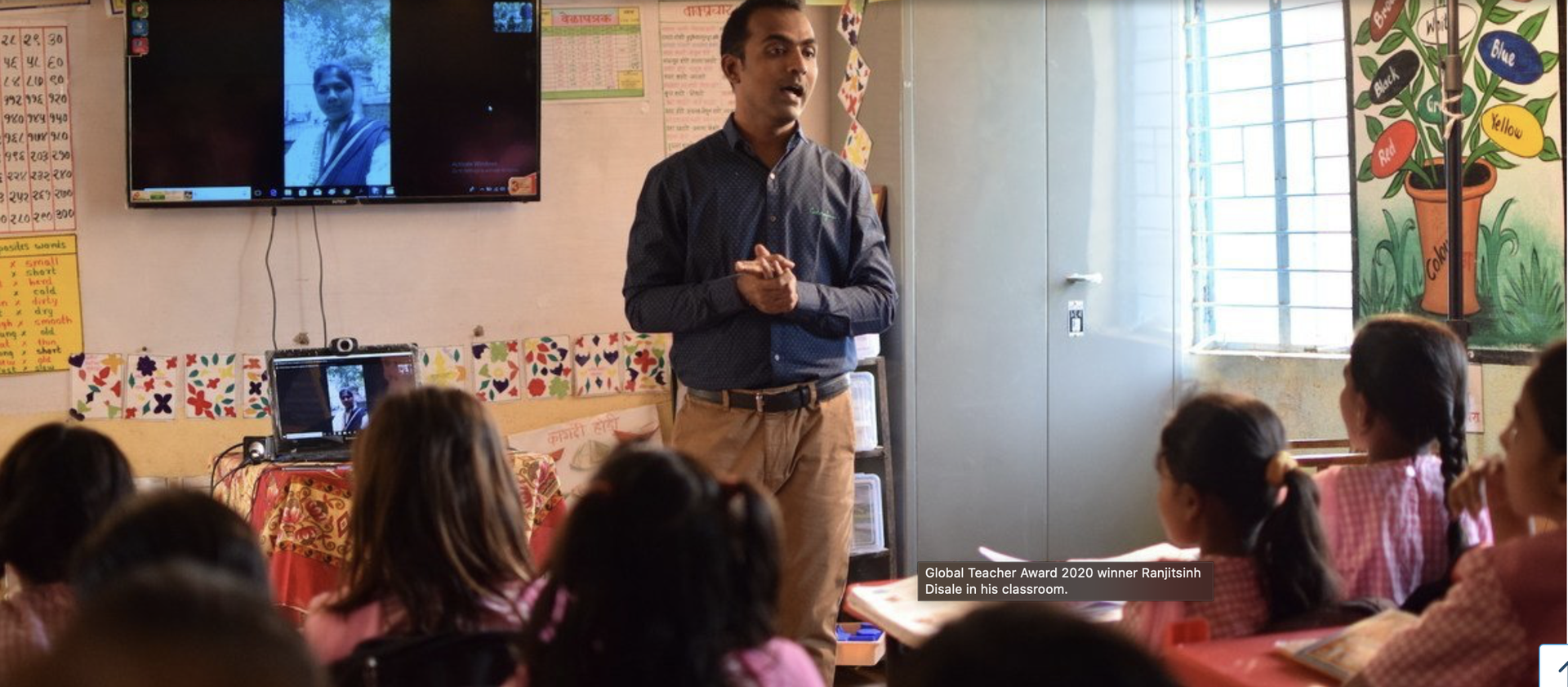
Digital access isn’t just an infrastructure issue—it’s a civil rights issue in the making. If 48% of schools are offline, nearly half our children are already locked out of India@100. When I introduced QR-coded textbooks, students didn’t have smartphones. That gap between innovation and infrastructure taught me that brilliance without bandwidth is a broken promise.
If you look at the UDISE+ 2023 data, only 52% of government schools in India have internet connectivity. This highlights a significant gap in our digital infrastructure that continues to limit equitable access to technology-enabled learning. While electricity is available in over 90% of schools, internet access remains a bottleneck.
To bridge this gap, we must move beyond aspiration and focus on grounded, achievable goals. Too often, we announce ambitious ed-tech visions without investing in the basics. The first step is to set realistic, region-specific targets for digital infrastructure expansion—starting with the most underserved blocks.
Second, we need a data-driven approach. We must use school-level data to map infrastructure gaps, assess device availability, and track teacher readiness. Digital equity is not just about fiber optics—it’s about understanding who is left out and why.
Lastly, no single actor can do this alone. Edtech firms, telecom providers, and governments must work in partnership, not isolation. The private sector’s innovation, paired with the government’s reach, can create meaningful access for the last-mile learner.
You’ve been a strong advocate of girls’ education. How can we scale such efforts nationally to build an India@100 where no child is left behind?
To be honest, I don’t believe scaling “my” effort is the answer. Real transformation happens when we enable communities to lead their own change. In my village, I didn’t start with big resources—I started by listening to parents who feared sending their daughters to school. It was slow, local, and personal.
Scaling girls’ education in India@100 means unleashing the changemaker potential in every community—especially among teachers, mothers, frontline workers, and local leaders. If each village had just one trusted advocate for girls’ education, we wouldn't need to replicate outside models. We’d build inside-out solutions.
But empowerment alone isn’t enough—we must also remove structural barriers. Girls drop out not because they lack talent, but because of child marriage, unsafe travel, or the burden of unpaid work. Scaling efforts means addressing these intersections holistically.
Lastly, we need to redefine success. It’s not just about enrollment or completion rates. It’s about dignity, agency, and ensuring every girl has the tools to shape her future.
An India@100 worth building is one where every girl—not just enrolled but empowered—leads the way for her community. That’s not a dream. I’ve seen it happen. I would encourage CII members to join me in this mission—to empower girls not just to participate, but to lead. Because when girls lead, communities rise.
At India@100, our goal should be clear: not one child less—not one girl unseen.